It stays yours
Prompts, transcripts, code and costs live on your disk. Nothing leaves the machine except the model API calls you configure — and you can point those at a local model instead.
Self-hosted agent layer
Tokunia runs coding agents on your own machine and keeps the books. Every turn is a line: what it read, what it wrote, what it cost you, and what it cost the planet.
The demo runs entirely in your browser on generated data. No account, no backend, nothing to install.
TOKUNIA
ITEMISED AGENT RUN
TOTAL$25.79
30.7M tokens
ALSO BILLED TO THE PLANET
about 4 km in a petrol car
— KEEP THIS RECEIPT —
Accounted for on the author's own machine:
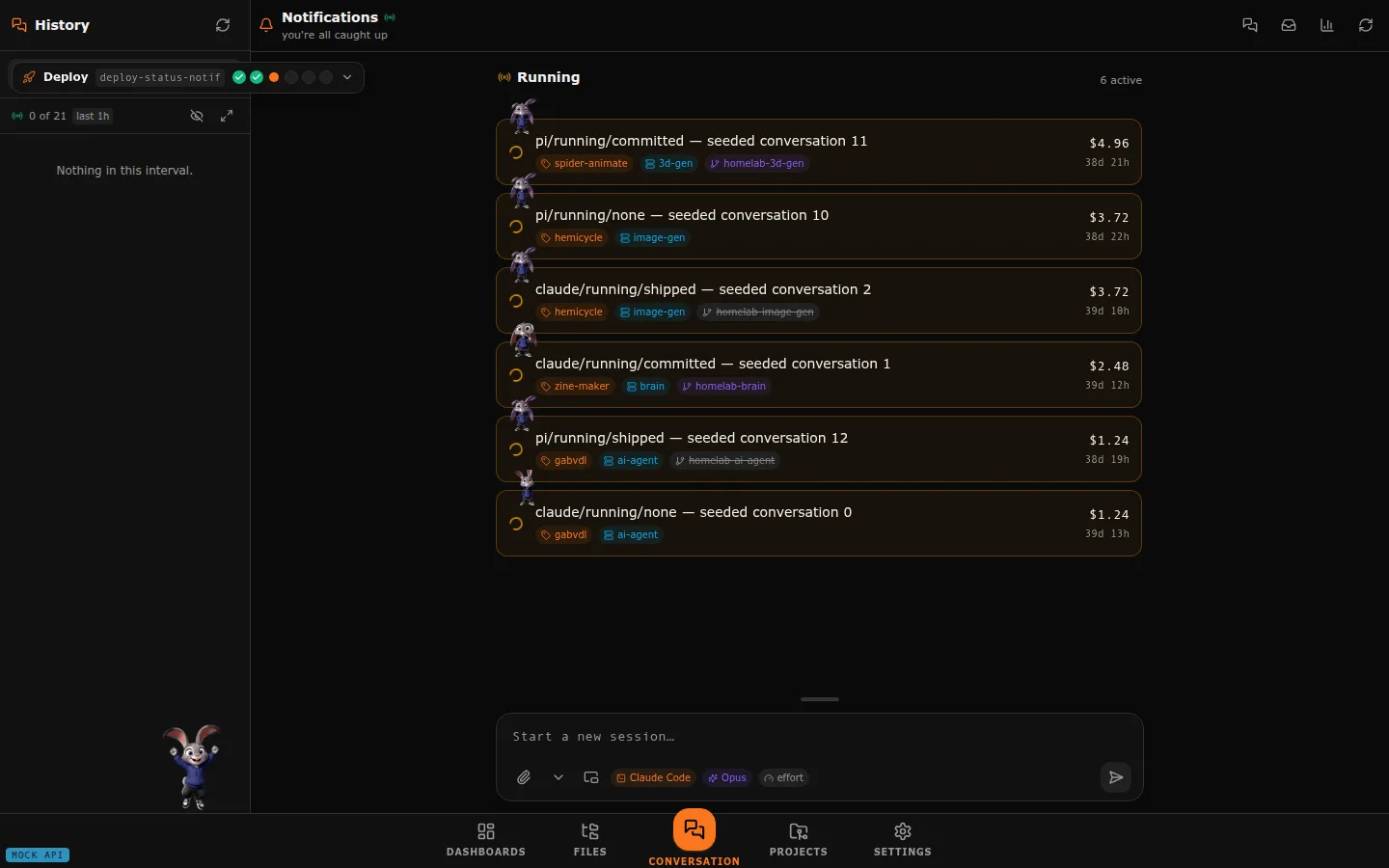
Pick a model and an effort level, attach files, and send. The run streams into a live thread within seconds — interrupt it, resume it, or fork it from any turn.
Every transcript becomes a readable thread: tool cards with durations and diff stats, thinking blocks, task panels, and the token cost of each turn as it lands.
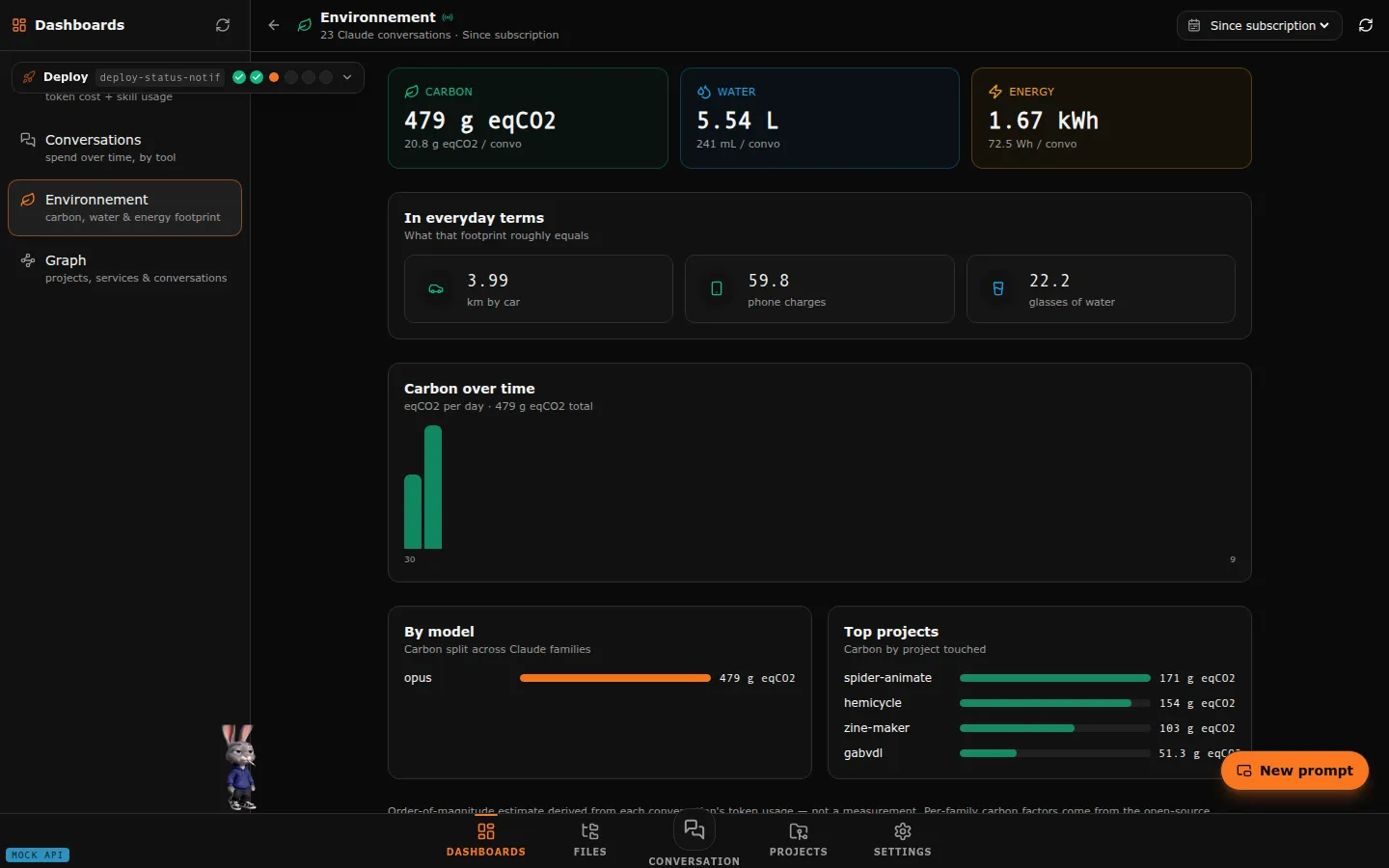
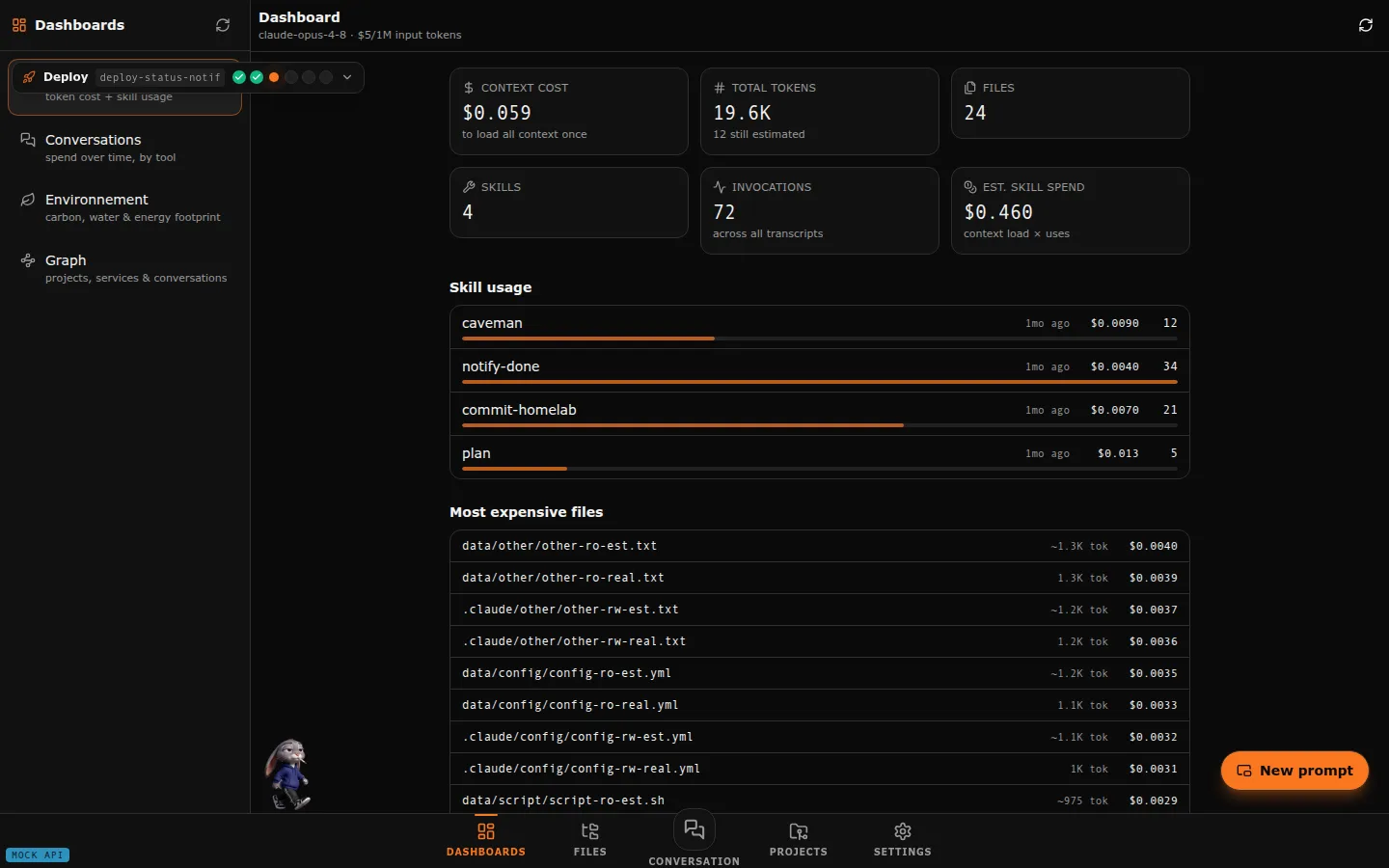
Spend by tool, by project, by model, over time. Which skills earn their context. Which files are expensive to load. And the same run priced again in carbon, water and energy.
Edit every CLAUDE.md and the whole
.claude/ tree — skills, hooks, agents, memories —
with real token counts beside each file. Cheaper context, cheaper
runs.
Prompts, transcripts, code and costs live on your disk. Nothing leaves the machine except the model API calls you configure — and you can point those at a local model instead.
Agents are cheap per token and expensive per hour. Tokunia prices every run twice — once in dollars, once in grams of CO2e — so the cost of a habit is visible before the invoice arrives.
Backend, UI and the agent runner ship in a single image. No host agent to install, no cloud account, no per-seat pricing. Read the code, change it, rebuild it.
git clone https://git.gabvdl.xyz/gabrielvidal/ai-agent
cd ai-agent
AI_AGENT_WORKSPACE=/path/to/your/repo \
  docker compose -f docker-compose.standalone.yml up -d --build
# → http://localhost:8096
Set ANTHROPIC_API_KEY, or mount a logged-in Claude home,
and the bundled runner spawns sessions with no host process at all.
Catalogs you don't mount simply stay empty.
One honest caveat. That build still resolves this project's design-system package from a private registry, so today it only completes on the author's own network. Publishing that package — and with it a real one-line install — is the next thing on the roadmap. Until then, the demo is the way to try it.